










Key Tips for Online Blackjack from the Best Players


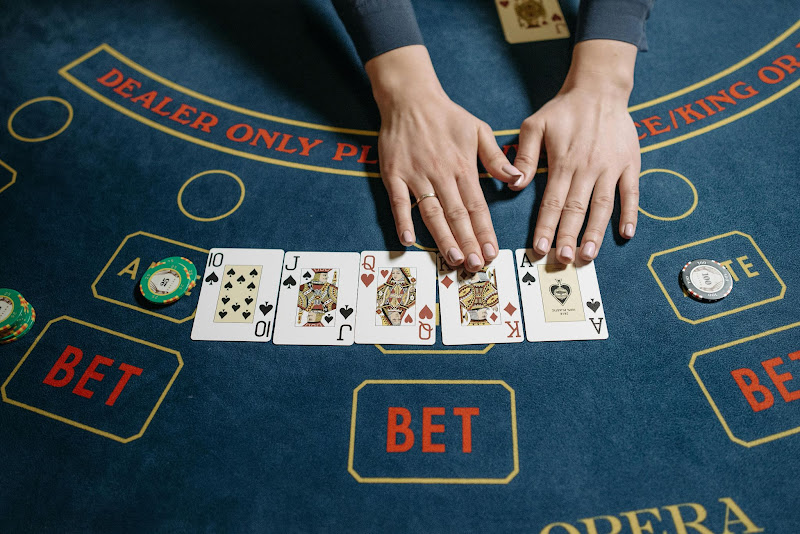
Blackjack has the lowest house edge of any standard casino game. With basic strategy and reasonable table selection, you can get the house advantage down to around half a percent. Which is nothing, the house still wins in the long run, but it’s the best position a player can put themselves in outside of poker.
Most people don’t play anywhere near this well. They make gut decisions, take insurance, stay on soft 17, play tables that pay 6:5 on blackjack, and wonder why they keep losing. The gap between intuition and correct play in blackjack is larger than in almost any other casino game.
These are the tips that serious players and mathematicians have settled on after millions of simulated hands. If you’re playing online blackjack at a platform like SpinBet, which carries multiple live and RNG variants, including European, Classic, and multi-hand formats. Applying even a handful of these will meaningfully shift how you play.
Tip 1: Learn Basic Strategy Before Anything Else
Basic strategy is the mathematically correct play for every possible combination of your hand and the dealer’s upcard. It was derived by running hundreds of millions of hands through a computer simulation and recording which decisions produced the best outcome over time. It is not a system someone invented. It’s the result of probability calculation at scale.
Playing perfect basic strategy reduces the house edge to approximately 0.5% in a standard multi-deck game with reasonable rules. That means for every $100 you wager, you can expect to lose around 50 cents over the long run. Deviate from basic strategy regularly, and that number climbs sharply.
The key decisions basic strategy covers:
- Hard totals: hands without a usable ace. Hard 16 vs a dealer 10 is one of the most misplayed hands in the game. Basic strategy says hit, regardless of how uncomfortable it feels.
- Soft totals: hands containing an ace counted as 11. Soft 18 (Ace-7) vs a dealer 9 should be hit, not stood on. Most players stay. Most players are wrong.
- Pairs: always split aces and eights. Never split fives or tens. These are non-negotiable.
- Doubles: double down on 11 against most dealer upcards, on 10 against anything below a 10, and on 9 against dealer 3 through 6.
Basic strategy charts are freely available online and can legally be used at most live casino tables. In online RNG blackjack, you can have one open next to the game. There is no reason not to use one while you’re still learning.
Tip 2: Table Selection is a Strategy Too
Not all blackjack tables are equal. The rules printed on the felt, or listed in the variant info at an online casino, can swing the house edge by more than 1.5% between the best and worst versions of the game. That gap is bigger than any strategy improvement you can make at a bad table.
The two most important rules to check:
Blackjack payout: 3:2 or 6:5. This single rule has the largest impact on expected value. At 3:2, a $10 blackjack pays $15. At 6:5, it pays $12. That $3 difference, multiplied by the roughly four blackjacks per hour you’ll average, costs you $12 an hour for the privilege of sitting at the wrong table. Never play 6:5 blackjack.
Dealer stands or hits soft 17 (S17 vs H17). Dealer standing on soft 17 is better for the player. Hitting soft 17 adds approximately 0.2% to the house edge. Look for ‘Dealer stands on all 17s’ in the game rules.
Rule Variants and Their Effect on House Edge
|
Rule Variant |
Effect on House Edge |
Notes |
|
Blackjack pays 3:2 (standard) |
−0.53% |
Baseline for basic strategy calculation |
|
Blackjack pays 6:5 |
+1.39% |
Avoid wipes out most strategy gains |
|
Dealer stands on soft 17 (S17) |
−0.20% |
Better for the player, look for this |
|
Dealer hits soft 17 (H17) |
+0.20% |
Adds ~0.2% to house edge |
|
Double down on any two cards |
−0.23% |
More flexibility = better for the player |
|
Double down on 10–11 only |
+0.23% |
Common restriction, check the table rules |
|
Re-split aces allowed |
−0.08% |
Small gain, check individual table rules |
|
Late surrender available |
−0.07% |
Use correctly: surrender 16 vs 9/10/A |
|
Eight decks vs. a single deck |
+0.48% |
More decks = higher house edge |
No blackjack strategy eliminates the house edge or guarantees a profit. Always set a session budget before you play and treat losses as the cost of entertainment. If gambling is becoming a problem, remember that there's always help and confidential support available.
Tip 3: Double Down When the Math Says To
Doubling down is one of the most powerful tools in blackjack and one of the most underused. Most casual players double only when they feel confident, which usually means only on 11. That’s leaving money on the table.
The correct double-down situations in a standard multi-deck game:
- 11: double against all dealer upcards except an ace (in H17 games, double against an ace too)
- 10: double against dealer 2 through 9
- 9: double against dealer 3 through 6
- Soft 13–18: various doubles against dealer 5 and 6 in particular (check a full strategy chart for the exact breakdown)
The logic: doubling puts more money on the table in situations where you have a mathematical advantage. Not every double will win, but over time, the correct doubles increase your expected return. Avoiding them because they ‘feel risky’ is giving the edge back to the house.
Tip 4: Split the Right Pairs, Not Just Any Pair
Pair splitting is another high leverage decision that most players get wrong at least some of the time. The rules are actually fairly simple once you know them:
- Always split aces and 8s. Always, against every dealer upcard. Splitting aces gives you two chances to start a hand at 11. Splitting 8s converts a terrible 16 into two potentially playable hands.
- Never split 5s or 10s. Two 5s make a 10, which is a strong doubling hand. Splitting them into two weak 5-hands is a mistake. Two 10s make 20, which wins the vast majority of the time. Splitting them is giving up a winning hand.
- Situational splits 2s, 3s, 6s, 7s, and 9s against specific dealer upcards. These require a basic strategy chart to get right consistently. The general principle: split when the dealer is weak (showing 4, 5, or 6) and be more cautious when the dealer is strong (showing 7 through ace).
Tip 5: Never Take Insurance
Insurance is offered when the dealer shows an ace. You put up half your current bet as a side wager that the dealer has a 10 in the hole, completing a blackjack. If they do, the insurance bet pays 2:1, offsetting your main hand loss.
The math: in a standard six-deck game, there are 96 ten-value cards out of 312 total. The odds of the dealer having a 10 in the hole when showing an ace are roughly 30.7%. But the insurance bet only pays 2:1, which requires a 33.3% win rate to break even. Insurance has a house edge of around 7.4%, one of the worst bets at the table.
Insurance is generally not a good bet for the player because the odds are not in the player's favor. PokerNews states that “for most recreational players, saying 'no' to insurance is the smart move”. Even when you have a blackjack, it’s statistically worse for the player to get insurance than just letting the hand play out.
Tip 6: Size Your Bets to Your Bankroll
Bankroll management in blackjack is simpler than in most casino games because the variance is relatively low. The key principle: never bet more than 1–2% of your session bankroll on a single hand.
A practical sizing guide:
- $200 session budget: $2–$5 per hand
- $500 session budget: $5–$10 per hand
- $1,000 session budget: $10–$20 per hand
The reason this matters: you need enough bankroll depth to absorb the variance of a normal session without busting out before the law of large numbers can assert itself. A skilled basic strategy player at a good table is playing close to even, but ‘close to even’ still produces swings. An undersized bankroll means you’re out before the session has any meaningful sample size.
Flat betting, the same stake every hand, is the lowest variance approach and genuinely the right choice for most recreational players. Progressive systems like Martingale (doubling after losses) sound logical, but don’t change the house edge and expose you to catastrophic loss if a losing streak runs longer than your bankroll depth allows.
Tip 7: Use the Online Environment to Your Advantage
Online blackjack has several specific advantages over land-based play that players often don’t leverage enough:
Practice in demo mode
Most RNG blackjack variants at online casinos, just like SpinBet can be played for free. Use this to learn basic strategy without financial risk. It’s not available in live dealer games, but for RNG tables, it’s one of the most underused tools in the game.
Strategy charts are always available
You can have a basic strategy chart open in another tab during every hand. There is no social friction online. Use it until you know it by heart.
Check variant rules before playing
reen tells you payout rates, deck count, and whether the dealer hits soft 17. Check it before sitting down.
Opt for live dealer games instead of RNG
Live dealer blackjack plays at roughly 40–60 hands per hour, giving you more time per decision. RNG blackjack can play 200+ hands per hour if you click fast. More hands per hour means more exposure to the house edge per hour, even at the same stake. Slower is often better for your bankroll.
Back Your Hunches
Blackjack has always balanced mathematics with instinct. Basic strategy can reduce the house edge significantly, but players still lean on intuition in pressure moments, especially when momentum, table dynamics, and shifting odds come into play. That overlap between logic and gut feeling helps explain the game’s lasting appeal: players are n
Different online blackjack variants can have wildly different rules. The game info scot just watching outcomes unfold, they feel actively involved in shaping them through every decision they make.
The Tips That Actually Matter
The honest summary: Blackjack is the one casino game where a player who does their homework can bring the house edge close to zero. That doesn’t mean you’ll win; the house edge still exists, and the variance in any finite session is significant. But it means you’re competing as well as the game allows.
The tips that matter most, in order of impact: play 3:2 tables, learn and use basic strategy, never take insurance, double and split correctly, and size your bets sensibly. Everything else is details on top of those fundamentals. Get those right first. The rest of the game opens up from there.
Safe Gambling
Gambling is for entertainment only and is not a reliable way to make money. If you feel gambling is becoming a problem for you or someone you know, please seek support from a qualified professional.
RELATED ARTICLES

Sports Betting Licensing in 2026: iGaming License Guide for Operators

Which Is The Best Betting App in Kenya? 2026 Rankings & Reviews

Best Betting Apps in Kenya (2026): Top Bookmakers, M-Pesa Integration, and Tax Guidelines

Why Free-to-Play Casino Games Are Winning Over New Players Worldwide
Sports Betting Licensing in 2026: iGaming License Guide for Operators
Which Is The Best Betting App in Kenya? 2026 Rankings & Reviews
Best Betting Apps in Kenya (2026): Top Bookmakers, M-Pesa Integration, and Tax Guidelines
Why Free-to-Play Casino Games Are Winning Over New Players Worldwide

Inside The Sports Geek: How a Trusted Sports Resource Helps Bettors Make More Informed Decisions

Gambling vs online casinos: which generates more US revenue?
Best Betting Prediction App for Football 2026: Verified Rankings & Reviews