





Sports Betting Licensing in 2026: iGaming License Guide for Operators


Key Takeaways
- A valid iGaming licence is non-negotiable: without one, payment processors, app stores and banks will not work with an operator.
- Licence types split along two axes — B2C versus B2B, and fixed-fee versus revenue-based — and this choice shapes every downstream cost.
- Jurisdiction tiers range from budget offshore options like Curaçao to premium regulated markets like the UK and Malta, with total first-year costs spanning roughly €15,000 to over €500,000.
- The licensing process typically runs three to nine months, and incomplete documentation is the single biggest cause of delay.
- Technical compliance — RNG certification, in-jurisdiction server hosting, KYC/AML and PSP onboarding — is the final gate before any licence is issued, regardless of jurisdiction.
Launching an iGaming operation — an online sportsbook or virtual casino offering sports wagering — without a valid licence in 2026 means blocked payment processors, banned app stores, and regulatory shutdown, whatever turnkey sportsbook solution sits behind it. A license is the foundation of industry integrity and public trust, and it enforces player protection standards long before the iGaming license cost 2026 becomes a budgeting question. This guide is a practical pre-launch roadmap: license types, jurisdictions, the application process, and total costs.
What Is an iGaming Licence?
An iGaming licence is a formal authorisation issued by a recognised regulatory authority that permits a business to legally offer real-money gambling services, whether that is sports betting, casino games or poker. Without a licence in the relevant market — or a recognised offshore equivalent — an operator has no legal basis to accept real-money wagers and no credible path to the banking relationships a live sportsbook depends on.
Regulators issue licences only after a "fit and proper" test on a company's directors, shareholders and key personnel, examining financial probity, criminal history and any prior regulatory conduct. This vetting exists to protect industry integrity and to enforce player protection standards such as responsible gambling tools and segregated player funds. It is also why the licence matters commercially, not just legally: no payment provider, platform supplier or serious affiliate partner will sign an agreement with an unlicensed operator, however strong the product.
Types of iGaming Licences
The first strategic decision an operator makes is not which jurisdiction to pick — it is which licence structure fits the business model, because that choice shapes every compliance and cost decision that follows.
B2C versus B2B.
A B2C operator licence covers businesses taking bets directly from players; this is what most sportsbooks and online casinos need. A B2B supplier licence, by contrast, covers companies providing platform technology, games or services to licensed operators rather than dealing with players directly.
The Malta Gaming Authority (MGA) issues a distinct Class 4 licence specifically for platform providers. Some groups end up holding both — a B2C licence for their own consumer-facing brand, and a B2B licence if they later licence their platform technology to third parties — which is worth planning for even if only one is needed at launch.
Fixed-cost versus revenue-based licences.
Some regulators charge a flat annual fee regardless of turnover; Curaçao's supervisory fees are a good example, staying broadly stable whatever volume an operator processes. Others scale with gross gaming revenue: the UK Gambling Commission (UKGC)regime and Ontario's iGaming framework both work this way, so the cost of the licence grows with commercial success rather than being capped upfront. Fixed-fee jurisdictions suit lean start-ups testing a market; revenue-based jurisdictions suit operators who value the credibility of a top-tier licence and can absorb a scaling cost base.
Sub-licence hierarchies.
Several offshore and mid-tier jurisdictions have historically run a master-licence structure, under which a master licence holder issues sub-licences to individual operators. This cuts time-to-market considerably, since much of the corporate and financial vetting happens once at the master level rather than being repeated for every operator underneath it.
Curaçao is retiring this structure under its 2024 National Ordinance on Games of Chance (LOK) reform, moving toward direct licensing by a centralised Curaçao Gaming Control Board. Operators evaluating a sub-licence route in 2026 should confirm which regime currently applies before committing, since a sub-licence issued under the old master structure may need to be re-papered as the transition completes.
Top iGaming Licensing Jurisdictions in 2026
Jurisdiction selection determines market access, the compliance burden an operator carries indefinitely, the cost structure of the business, and its credibility with banks and technology suppliers.
Most 2026 comparisons group jurisdictions into rough tiers. Tier 1 — the UKGC and MGA — offers the strongest regulatory reputation and the best odds of frictionless banking, at the highest cost and longest timelines. Tier 2 — the Isle of Man Gambling Supervision Commission (GSC) and Gibraltar — sits between the extremes: respected by banks and suppliers, generally faster and cheaper than Malta or the UK, with genuine compliance obligations rather than a light-touch offshore regime. Emerging markets, such as Kenya and South Africa, offer growing, mobile-first player bases but carry more regulatory uncertainty as their frameworks modernise.
Curaçao remains one of the most accessible entry points, though the 2024 LOK reform introduced stricter direct oversight by the Curaçao Gaming Control Board and is phasing out the old master-licence model.
Malta, regulated by the MGA, remains the most widely recognised gaming brand globally and now issues a single licence covering multiple game types.
Gibraltar updated its regime under a 2026 Act introducing stricter economic substance requirements and individual accountability, positioning it more competitively against Malta and the Isle of Man Gambling Supervision Commission — both attractive for strong reputational standing without the UK's full compliance load.
Ontario, regulated jointly by the AGCO and iGaming Ontario, opened North America's first regulated online gambling market in 2022 and has since matured into a competitive market; operators should budget for a dual regulatory-commercial process and a multi-month runway.
Vanuatu, South Africa and Kenya are lower-cost or emerging alternatives: South Africa permits regulated sports betting while online casino gaming stays outside its legal framework, and Kenya's Betting Control and Licensing Board (BCLB) is mid-transition to a new Gambling Regulatory Authority under the Gambling Control Act, 2025. Jurisdictions offering corporate tax optimisation, such as Gibraltar's capped gambling tax, add a further variable to weigh alongside licensing cost.
|
Tier |
Jurisdictions |
Regulatory Authority |
Typical First-Year Cost |
Typical Timeline |
|
Tier 1 |
UK, Malta |
UKGC, MGA |
€60,000–€500,000+ |
3–6 months+ |
|
Tier 2 |
Isle of Man, Gibraltar |
Isle of Man GSC, Gibraltar regulator |
€40,000–€150,000 |
3–6 months |
|
Offshore |
Curaçao, Vanuatu |
Curaçao Gaming Control Board |
€15,000–€60,000 |
1–3 months |
|
Emerging |
Kenya, South Africa |
BCLB, provincial PLAs |
Varies by licence category |
Varies |
|
North America |
Ontario |
AGCO / iGaming Ontario |
CAD 100,000+ per site, plus revenue share |
4–10 months |
Step-by-Step Licensing Process in 2026
Regardless of jurisdiction, the licensing process follows a broadly consistent sequence: corporate setup, document preparation, application submission, compliance audit, technical review and final approval.
Corporate setup — legal entity incorporation, governance structures, and sometimes local substance mandates — can take several weeks before submission. Meeting a jurisdiction's compliance requirements, including the fit and proper test, the direct application fee, and technical compliance audits, is what keeps timelines at the shorter end of the three-to-nine-month range rather than beyond it.
Document Checklist and Vetting for Key Personnel
Before submission, operators should assemble corporate registration documents, a full ultimate beneficial ownership (UBO) disclosure chain, and fit and proper declarations for every director, shareholder and key person named in the application.
Regulators assess this package against three things: financial probity, criminal background, and any prior regulatory history anywhere in the world. Alongside personnel vetting, most frameworks require bank reference letters covering bank guarantees, proof-of-capital documentation, a written AML policy, evidence that independent third-party testing has been arranged for the platform, and an operational business plan describing how the business will actually run day to day. Incomplete UBO chains or missing personnel declarations are among the most common causes of delay.
Financial Requirements and Proof of Stability
Regulators require concrete proof of financial stability, not just a stated intention to operate responsibly. This typically includes minimum registered capital that varies significantly by jurisdiction, bank guarantees held against player liabilities, and source-of-funds documentation demonstrating that the business is properly capitalised. Audited financial statements are required in stricter jurisdictions.
Corporate setup fees and the direct application fee sit on top of this capital requirement, and jurisdictions offering corporate tax optimisation can meaningfully change the total cost of ownership once trading begins. Operators should budget a realistic first-year figure — inclusive of legal counsel and compliance infrastructure — rather than treating the headline application fee as the total cost of entry.
Technical Infrastructure and In-Jurisdiction Server Mandates
Technical compliance is the final gatekeeping stage before licence issuance, whether an operator is heading toward Curaçao or the UKGC. Some jurisdictions mandate in-jurisdiction server hosting — commonly bare-metal or colocation hosting located physically within the regulator's territory — while others accept infrastructure hosted anywhere, provided it meets the regulator's technical specifications and passes the same audits. Local server mandates vary by regulator, but RNG certification and AML transaction monitoring are near-universal requirements regardless of where the licence is issued.
Every technology supplier feeding games or platform software into a licensed operator needs its own compliance trail: RNG certification and independent third-party testing from an accredited lab, clean API and player account management (PAM) integration with the operator's core systems, and — where a game aggregator is involved — confirmation that every studio in the aggregated catalogue carries valid certification in the target jurisdiction.
On the player-facing side, self-exclusion options, KYC verification, and AML controls aligned with GDPR (where EU player data is involved) all need to be live and demonstrably working before a regulator will sign off. Technical compliance audits typically test all of this together — server location, RNG output, payment provider setup, and player protection tooling — as a single pre-launch gate, which is why technical readiness needs to start in parallel with the corporate application rather than after it.
Conclusion
Choosing an iGaming licence in 2026 comes down to four decisions: B2C or B2B structure, fixed or revenue-based fees, jurisdiction tier, and how early technical compliance work starts alongside the corporate application. Operators who treat licensing as a strategic input, rather than a box to tick after the platform is built, consistently launch faster and with fewer compliance surprises.
RELATED ARTICLES

Which Is The Best Betting App in Kenya? 2026 Rankings & Reviews
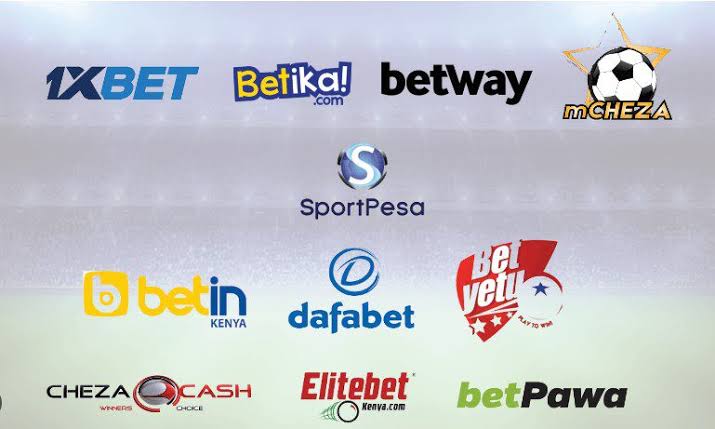
Best Betting Apps in Kenya (2026): Top Bookmakers, M-Pesa Integration, and Tax Guidelines

Why Free-to-Play Casino Games Are Winning Over New Players Worldwide

Inside The Sports Geek: How a Trusted Sports Resource Helps Bettors Make More Informed Decisions
Sports Betting Licensing in 2026: iGaming License Guide for Operators
Which Is The Best Betting App in Kenya? 2026 Rankings & Reviews
Best Betting Apps in Kenya (2026): Top Bookmakers, M-Pesa Integration, and Tax Guidelines
Why Free-to-Play Casino Games Are Winning Over New Players Worldwide
Inside The Sports Geek: How a Trusted Sports Resource Helps Bettors Make More Informed Decisions

Gambling vs online casinos: which generates more US revenue?
Best Betting Prediction App for Football 2026: Verified Rankings & Reviews